
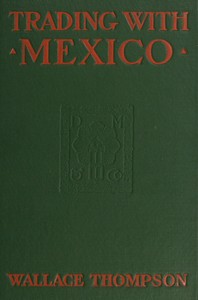
Trading with Mexico by Wallace Thompson
Published in 1921, Trading with Mexico lands right in the messy aftermath of the Mexican Revolution. Author Wallace Thompson wasn't an academic historian; he was a journalist and a business promoter with boots on the ground. His book is a direct appeal to the American public, especially investors and businessmen who were nervous about the country next door.
The Story
There isn't a plot in the traditional sense. Instead, Thompson builds a case. He starts by acknowledging the fear—the revolution was real, violent, and made big news in the U.S. But then, he tries to turn the page. Chapter by chapter, he outlines Mexico's geography, its natural resources, its railroads, and its agriculture. He argues that the period of destruction is over and a new era of construction is beginning. The 'story' is his attempt to shift the American perspective from seeing Mexico as a problem to seeing it as a partner. He mixes facts and figures with almost promotional language, urging for trade, investment, and a particular kind of cooperation that would clearly benefit American interests.
Why You Should Read It
This book is compelling because it's so openly of its time. Thompson's passion is palpable, but so is his viewpoint. He genuinely believes in Mexico's potential, but he's also writing from a very American, early-20th-century mindset. You won't find much here about Mexican sovereignty or the perspectives of everyday Mexican citizens. That's what makes it a powerful primary source. You read it to understand a specific argument being made at a specific crossroads in history. It's less about learning the 'truth' of 1920s Mexico and more about hearing one loud, confident voice in a complex conversation about money, power, and neighbors.
Final Verdict
This isn't for everyone. If you want a neutral, modern history textbook, look elsewhere. But if you're a history fan who loves primary sources, or someone interested in U.S.-Latin American relations, this is a gem. It's also great for readers who enjoy seeing how economic arguments are framed and sold to the public. Think of it as a historical business report with a lot of personality. You'll come away with a sharper sense of how the past shapes the economic and political debates we're still having today.
The copyright for this book has expired, making it public property. Use this text in your own projects freely.


Richard Williams
1 month agoSurprisingly enough, the content flows smoothly from one chapter to the next. Don't hesitate to start reading.