
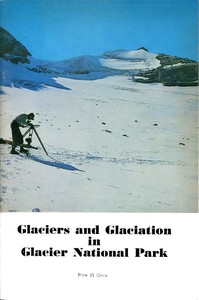
Glaciers and Glaciation in Glacier National Park by James L. Dyson
James L. Dyson's Glaciers and Glaciation in Glacier National Park is a classic guide to the park's icy heart. Published in the mid-20th century, it serves as the definitive scientific explanation for the park's most dramatic scenery. Dyson doesn't just list glaciers; he tells the story of the ice.
The Story
The book doesn't have characters in the traditional sense. The protagonists are the glaciers themselves—Grinnell, Sperry, Jackson. Dyson lays out their life stories: how they were born from accumulated snow, how they slowly flow and grind down mountains, and how they eventually retreat, leaving behind the U-shaped valleys, sharp arêtes, and deep lakes that define the park. He maps their historic extent, explains their movements, and decodes the landscape like a puzzle where every lake and cliff face is a clue left by the ice.
Why You Should Read It
What makes this book special is the perspective time has given it. Dyson wrote with the authority of a geologist who saw the glaciers as stable, long-term geological features to be measured and understood. There's no alarm about climate change here—that wasn't the scientific context of his time. This gives his meticulous observations a powerful, unintended weight. Reading his precise descriptions and seeing the photographs from decades ago creates a direct, sobering comparison with what visitors see today. It transforms from a pure science book into a historical benchmark. You gain a deep appreciation for the colossal forces that built the park and a tangible sense of scale for the changes happening now.
Final Verdict
This is a must-read for anyone who loves Glacier National Park and wants to move beyond simple admiration to real understanding. It's perfect for the curious hiker who looks at a valley and wonders 'how?', for the science-minded traveler, and for anyone interested in the quiet power of observational science. It's not a casual beach read, but its clear explanations and profound context make it incredibly rewarding. Pair it with a current park map, and you'll never see those mountains the same way again.
This content is free to share and distribute. Use this text in your own projects freely.
David Ramirez
1 year agoI started reading out of curiosity and it provides a comprehensive overview perfect for everyone. Exceeded all my expectations.





Joshua Gonzalez
1 year agoPerfect.