
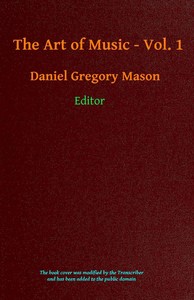
The art of music. Vol. 01 (of 14) : The pre-Classic periods by Mason et al.
Let's be clear: this isn't a novel. There's no main character named Greg the Gregorian Monk. 'The Art of Music, Volume 1' is a deep, historical look at the foundations of Western music, written by a committee of scholars over a century ago. It starts at the very beginning, with the music of ancient Greece and the early Christian church, and walks you through over a thousand years of development.
The Story
The 'plot' is the evolution of musical ideas. The book shows how single, unaccompanied vocal lines (plainchant) slowly began to develop rules for harmony and rhythm. It introduces you to the key players—not individuals, but movements and forms. You'll meet the rise of polyphony (multiple melodies at once), the development of musical notation (which was a game-changer), and the social shifts that moved music from the strict control of the church into courts and public squares. It ends on the brink of the Baroque period, setting the stage for the familiar masters to come.
Why You Should Read It
I loved this because it changed my perspective. Listening to a piece by Palestrina or a medieval motet used to just sound 'old' to me. Now, I hear the experimentation and the boldness in it. The book connects the dots in a way that makes you appreciate every innovation, no matter how small it seems now. It’s humbling to realize how many centuries of trial and error went into creating the basic language that Bach and Beethoven later used to write their masterpieces. It turns background music into a thrilling archaeological dig for your ears.
Final Verdict
This is a niche read, but a rewarding one. It's perfect for the curious music lover who enjoys history and wants to understand the 'why' behind the 'what.' If you play an instrument or compose, this is like reading the foundational rulebook. A word of caution: it's an old text, so the language can be formal in places, and some historical perspectives might feel dated. But as a starting point for a grand musical adventure across 14 volumes, it’s a compelling and insightful first step. Think of it as a time machine for your playlist.
This content is free to share and distribute. It is now common property for all to enjoy.
Anthony Robinson
8 months agoThanks for the recommendation.





Elijah Scott
4 months agoI started reading out of curiosity and the plot twists are genuinely surprising. I couldn't put it down.