
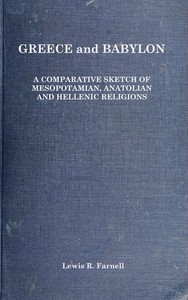
Greece and Babylon : A comparative sketch of Mesopotamian, Anatolian and…
Forget the idea of ancient civilizations living in isolated bubbles. In 'Greece and Babylon', Lewis Richard Farnell pulls back the curtain on a world of constant exchange. He doesn't just list facts; he connects dots across a vast geographical and cultural landscape, from the river valleys of Mesopotamia to the coastlines of Greece.
The Story
There's no single plot, but there is a compelling narrative thread: the story of influence. Farnell acts as a cultural detective, comparing gods, religious practices, art motifs, and societal ideas. He shows how a Greek goddess might share startling similarities with a much older Mesopotamian deity, or how a common mythic theme pops up in different forms across these regions. The book traces the pathways—trade, migration, conquest—through which these ideas likely traveled, painting a picture of a pre-classical world that was surprisingly interconnected.
Why You Should Read It
This book is a powerful antidote to the idea of 'pure' cultural origins. What fascinated me most was seeing Greek civilization not as a sudden, miraculous birth, but as a brilliant synthesis. Farnell argues that the Greek achievement was in how they adapted, refined, and recombined ideas from their older neighbors. It makes their philosophy, art, and literature feel even more impressive—not because it sprang from nothing, but because they took existing material and transformed it into something uniquely powerful and enduring. It’s a humbling and exciting perspective.
Final Verdict
Perfect for history buffs who are tired of the same old stories and want to understand the messy, fascinating connections between ancient worlds. It's also great for anyone interested in how ideas spread and evolve. A word of caution: it's an older academic work (first published in 1911), so the prose can be dense in places, and some of its conclusions have been debated by modern scholars. But that's part of the fun—it’s a foundational text that lets you see where these conversations began. Read it not for the final word, but for a brilliant, thought-provoking starting point.
Legal analysis indicates this work is in the public domain. Access is open to everyone around the world.
Patricia Martinez
2 years agoVery interesting perspective.
Thomas Allen
7 months agoAmazing book.
John Rodriguez
2 months agoPerfect.
Sarah Garcia
1 year agoVery interesting perspective.



Noah Walker
1 month agoJust what I was looking for.