
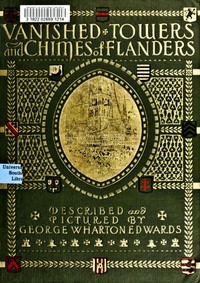
Vanished towers and chimes of Flanders by George Wharton Edwards
Let's be clear from the start: this is not a page-turning thriller. Vanished Towers and Chimes of Flanders is a travelogue, a sketchbook, and a historical record all rolled into one. George Wharton Edwards, an American artist and writer, journeyed through Flanders at the turn of the 20th century. His mission? To document the stunning Gothic architecture, the bustling market squares, and the daily rhythms of towns like Bruges, Ghent, and Ypres before modern life erased them.
The Story
There's no traditional plot. Instead, Edwards takes you by the hand and walks you through cobblestone streets. He describes the incredible detail of a cathedral's stonework, the way light falls through stained glass, and the deep, resonant sound of the carillon bells ringing across the rooftops. He chats with locals, records legends, and paints word pictures of windmills, canals, and guild halls. The 'story' is the slow, poignant realization that this way of life is fragile. He often notes buildings that are crumbling or customs that are fading. The book is his attempt to build a monument out of words and his own illustrations to preserve what he saw.
Why You Should Read It
I loved this book for its profound sense of place and its quiet urgency. Edwards isn't just a tourist; he's a witness. His writing makes you see, hear, and smell Flanders. You feel the chill of the stone in the churches and the community spirit in the town squares. The most powerful part, knowing what we know now, is that many of the towers and chimes he so lovingly described were utterly destroyed in the First World War, just a few years after publication. This accidentally turned his book into a precious, pre-war time capsule. It’s not a dry history lesson; it’s one man's heartfelt effort to hold onto beauty, knowing it's slipping away.
Final Verdict
This is a perfect, slow read for a quiet afternoon. It's for the traveler-at-heart, the history enthusiast who prefers stories to dates, and anyone who appreciates beautiful, descriptive writing. If you enjoyed books like In Patagonia or the essays of Jan Morris, you'll find a kindred spirit in Edwards. It’s also a must-read for anyone visiting modern Belgium—it will show you the layers of history beneath the current city. Fair warning: it’s a detailed, observational book, so if you need a fast pace, it might not be for you. But if you want to be transported to a lost European landscape, there are few guides better than Edwards.
The copyright for this book has expired, making it public property. It is available for public use and education.
Elizabeth Nguyen
8 months agoCitation worthy content.
Jennifer Perez
1 year agoI had low expectations initially, however the content flows smoothly from one chapter to the next. One of the best books I've read this year.





Joseph Hill
1 year agoClear and concise.