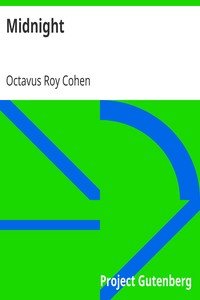
Midnight by Octavus Roy Cohen
So, I finally got my hands on Octavus Roy Cohen's Midnight, a book first published in 1928. It's a time capsule, but the story it tells feels startlingly relevant. Cohen was a white author who wrote extensively about Black life in Harlem, and while that comes with its own set of discussions, his work offers a unique, popular-fiction window into a specific time and place.
The Story
The setup is pure powder keg. A prominent white businessman, Warren D. March, is discovered murdered in the back room of the 'Cairo Club,' a popular Black nightclub in Harlem. The police, led by the brash Inspector Corrigan, want a fast and tidy solution to avoid a scandal. They turn to Detective Lee Brant, a sharp, principled Black officer who understands the neighborhood's rhythms in a way the white cops never could. Brant's investigation is a tightrope walk. He has to find the real killer while managing the club's owner, the charismatic and possibly shady Sam Dutton, a chorus of reluctant witnesses, and the ever-present threat of racial violence if the wrong person is blamed. The clues lead him through jazz-filled backrooms, tense street corners, and into the complicated personal lives of everyone involved.
Why You Should Read It
Look, this isn't a perfectly polished modern thriller. But its power lies in its setting and its detective. Reading Midnight is like uncovering a piece of literary archaeology. You get the slang, the fashion, the music, and the palpable tension of the era. Lee Brant is a fantastic anchor—a man caught between two worlds, using his intellect and local knowledge to seek justice in a system stacked against him. The book doesn't shy away from the ugly racism of the period, showing it through casual slurs and institutional barriers. It makes Brant's every small victory feel huge. You're reading for the mystery, but you stay for the vivid, buzzing world Cohen builds and the quiet dignity of its main character.
Final Verdict
This book is perfect for readers who love classic mysteries but want something off the beaten path. It's for anyone curious about the Harlem Renaissance era from a popular fiction angle, warts and all. If you enjoy stories where the setting is as much a character as the people, or if you're fascinated by early examples of detectives navigating social injustice, Midnight is a compelling and worthwhile read. Just be prepared for the language and attitudes of its time—it's all part of the history the story preserves.
There are no legal restrictions on this material. You can copy, modify, and distribute it freely.